Facebook Still Knows What’s Happening Around the Neighborhood
 GetAllApps ·
Most social apps are good at one kind of connection. Facebook is still unusually good at letting several kinds of life collide: a cousin’s photo, a neighborhood alert, a club’s event, a Marketplace listing, and a note from someone you have not seen in years. That combination can make the app feel crowded, even tiring. It can also make it the one place you check when you need to know what is happening around you. This week, Facebook earns our pick not because it has become simple, but because its unruly breadth remains genuinely useful.
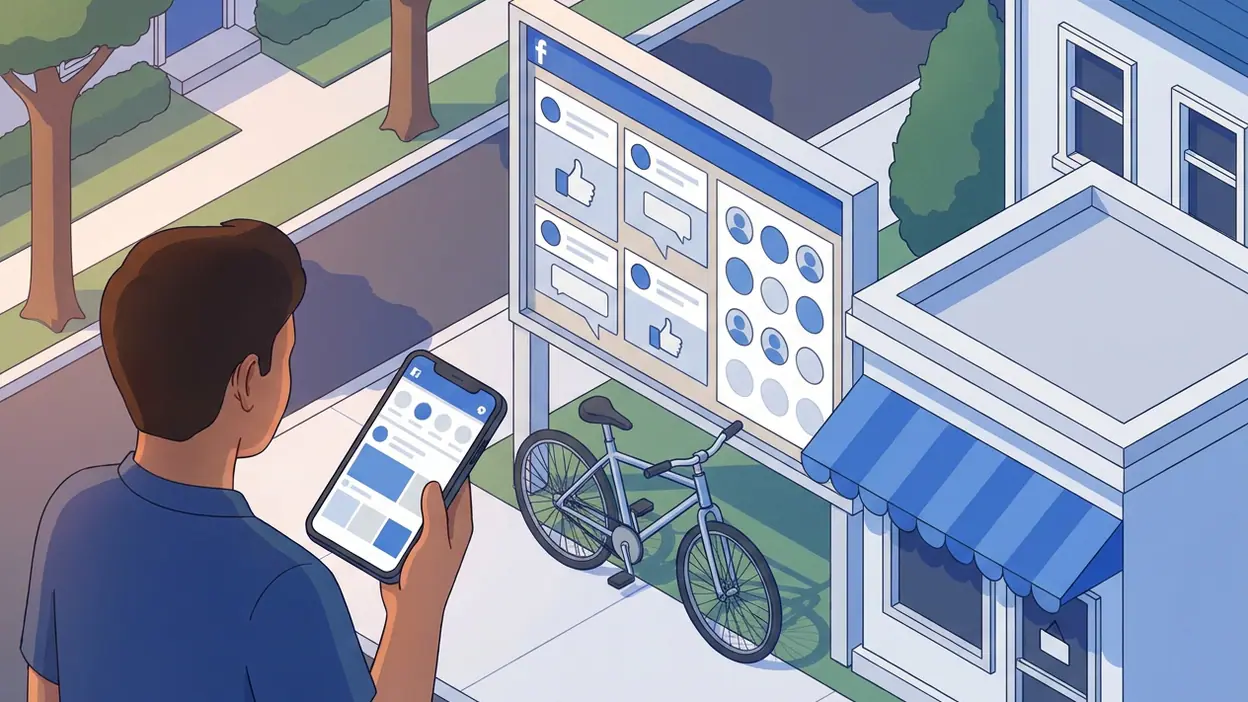
The case for opening it is practical rather than nostalgic. A well-run local group can tell you which road is closed, where to donate a sofa, or whether the school concert has moved indoors. An event page can gather the details and the replies in one place. Friends and family still share the small updates that never become polished posts elsewhere. Facebook is at its best when it acts less like a stage and more like a busy town noticeboard with familiar names attached.
Why Facebook won the week
The app’s strongest quality is that it connects people to communities, not just to individual creators. A group has its own questions, recommendations, running jokes, and memory. That gives it a texture a video feed cannot quite reproduce. You can ask for a reliable plumber, find a hiking partner, follow a local history page, and hear back from people who live close enough to know the answer.
That utility becomes especially clear when a community is active and well moderated. Posts get useful replies; event details are updated; members recognize repeat questions and point newcomers toward the right information. The experience is not always elegant, but the social context does real work. Facebook’s scale means the person with the answer may already be in the group, even if you have never met them.
Its breadth also makes the app resilient to changing routines. You might visit for a birthday post and stay to check a neighborhood group, then save an event for the weekend. That is not the same as saying every feature deserves equal attention. The value is that several useful destinations live under one roof, and you can choose the ones that fit your day.
What stands out instantly
Open the app and the first impression is abundance. The home feed mixes updates from people and pages with suggested material, while the navigation makes it possible to move toward groups, events, Marketplace, and other destinations. Facebook can feel like a building with too many rooms, but it does at least contain rooms for different needs. The trick is deciding which doors you actually want to use.
Groups are the most convincing of those rooms. Their best conversations are grounded in shared circumstances: the same neighborhood, hobby, school, workplace, or life stage. Unlike a general public post, a question in a focused group can attract responses from people who understand the details. The quality varies, of course, but when a group has thoughtful members and clear rules, it becomes a surprisingly dependable resource.
Events are another strength that is easy to overlook. They give a gathering a home for its time, place, updates, and guest discussion. That is more useful than scattering the details across messages, especially when plans change. Marketplace, meanwhile, gives local buying and selling a built-in audience. It can require caution and patience, but the ability to see nearby listings and arrange a pickup is straightforwardly useful.
Best use cases
Facebook earns its place most clearly in local life. If you have recently moved, a neighborhood group can help you learn the rhythms of an area faster than a search engine can: which market is worth the trip, where a lost dog was spotted, or what residents think of a new service. These answers are informal, not authoritative, so judgment matters. Still, the human detail is often the point.
It also works well for keeping loose ties alive. Not every relationship needs a dedicated chat or a scheduled call. A photo, comment, or short update can keep relatives, former classmates, and old colleagues within reach without asking everyone to adopt a new routine. WhatsApp Messenger is the sharper choice for direct, ongoing conversation; Facebook is better when the connection is broad, occasional, and shared among a wider circle.
For organizers, clubs, and small community groups, the app can serve as a practical hub. A group can handle discussion, while an event gathers attendance and changes. A local business can keep regulars informed. None of this replaces a proper booking or customer-service system, but it can reduce the friction of getting people in the same place at the same time.
What feels fresh
There is no honest way to call Facebook new. Its more interesting quality is how much of it can still be made relevant through deliberate use. Curating the feed, leaving stale groups, and following communities that give you something concrete can change the app from a stream of interruptions into a useful set of destinations. The freshness comes from returning with a purpose, not from pretending the platform has reinvented itself.
That distinction matters because the app’s feed can otherwise feel like an algorithmic grab bag. Friends’ updates sit beside recommendations and content selected to keep you scrolling. The result is variable: a lively family photo may be followed by a post you never asked to see. But groups and events provide a more intentional route through the app. They give you a reason to visit that is tied to a person, place, or plan.
Facebook’s cultural relevance also persists in the way people use it to maintain shared records. A community page can document an annual fundraiser; an event can gather memories and practical updates; a group can hold years of recommendations. That archive is imperfect, and it depends on the platform, but it can turn a fleeting post into a continuing conversation.
Who will connect with it fastest
The fastest converts are people whose social lives already overlap with local institutions: neighborhood associations, parent groups, volunteer organizations, hobby clubs, and extended families. If those people are already there, Facebook’s network effect is not an abstract statistic. It means you can ask a question today and receive a useful answer from someone nearby before the day is over.
It suits people who like browsing as well as communicating. You can check what friends are doing, skim a group, and see what is happening this weekend without committing to a single creator or conversation. YouTube is stronger when you want deliberate, long-form viewing. Facebook is more mixed and more social: its best moments often begin with another person’s update and lead somewhere practical.
It is less compelling for anyone who wants a quiet, tightly controlled feed or who has little use for groups, local listings, and broad social ties. If your priority is a clean stream of short videos or a focused work call, other apps make a more direct promise. Facebook’s appeal depends on having people and communities there that you genuinely want to keep up with.
Where it beats bigger names
Facebook does not beat every rival at its specialty. Zoom Workplace is purpose-built for scheduled meetings, and YouTube makes a stronger home for video discovery. WhatsApp Messenger keeps private conversation cleaner and more immediate. Facebook’s advantage is the overlap: it can host a group discussion, promote a public event, surface local listings, and keep distant acquaintances in view without requiring separate accounts for each task.
That overlap is especially valuable when the goal is coordination rather than polished communication. A community organizer does not always need a meeting link; they may need a place where people can ask questions before an event, find its location, and share a last-minute update. Facebook can carry that whole chain. Its reach makes it easier to include people who are not especially interested in adopting a specialized tool.
Its other advantage is the density of existing connections. The social graph is not always tidy, and old contacts can make the experience noisy, but a platform is useful when the people you need already check it. For an occasional neighborhood announcement or a family gathering, convenience can matter more than a cleaner interface.
Where it still has limits
The clutter is real. The feed can mix personal updates with recommendations and material from pages, leaving you to sort what matters from what merely fills space. Suggested posts sometimes interrupt the sense that you are catching up with people you chose to follow. Facebook gives you tools to shape the experience, but it does not always make those controls feel central or effortless.
Trust is another limit. Groups can be helpful, but they are not automatically reliable; local advice may be outdated, biased, or simply wrong. Marketplace requires the usual care around payments, meetups, and listings. The platform’s huge audience is a strength, yet it also means that moderation and information quality vary sharply from one corner to another.
Privacy and attention deserve active management, too. Before posting or joining, it is worth checking the audience and the group’s rules, and it is sensible to review notification settings rather than accepting every prompt. The app can be useful without being allowed to occupy every spare moment. A short list of meaningful groups is often better than an endless feed of loosely relevant ones.
Why now is the right moment
People often dismiss Facebook as a relic, then rediscover it the moment they need a local recommendation or an event page that friends are already using. That gap between reputation and practical value is exactly why it deserves a fresh look. You do not need to return to every feature or rebuild an old online identity. Start with one community you care about, one event you might attend, or one family connection you want to keep warm.
The payoff is modest but tangible: better awareness of what is happening nearby, fewer scattered details, and a lower-effort way to stay connected to people outside your closest circle. Unlike an app built around a single content format, Facebook can be useful in small bursts for very different reasons. That versatility feels particularly welcome when digital life is already divided across too many specialized services.
My editor’s note is simple: Facebook is worth keeping for the communities that make it feel local, not for the promise that every scroll will be rewarding. Treat the feed as a doorway, not a destination. Used with a little curation, the app remains an unusually capable bridge between online conversation and real plans. That is a deliberate reason to open it this week, and a better one than nostalgia.